In Zagreb County, Easter—commonly referred to as Vuzem in local dialect—has always been one of the most important holidays of the year, a time when faith, nature, and everyday life intertwine. It was not merely a religious celebration, but also a symbol of new beginnings, the awakening of the land, and the arrival of spring.
Preparations would begin as early as Holy Week. Homes were thoroughly cleaned, courtyards arranged, and work in the fields gradually came to a halt. On Palm Sunday, in addition to olive branches, people would bring branches of cornelian cherry, willow, or mistletoe to be blessed. The cornelian cherry held particular significance—being a plant that blooms early and is known for its resilience, it symbolised health, strength, and longevity. It was believed that such branches would impart these qualities to the household. After the blessing, the branches were placed under roof beams or on houses and farm buildings as protection against storms.
Holy Thursday marked the beginning of the Easter Triduum and brought with it a sense of silence and contemplation. Folk beliefs were also associated with this day—it was said that water, at the moment when the church bells “fell silent,” possessed healing properties, and people would wash with it for health and beauty. It was also believed that those who ate young greens and lettuce on that day would “absorb the strength of spring” and enjoy prosperity throughout the year.
Good Friday was observed as a day of fasting and solemnity, while Holy Saturday brought a sense of lively yet joyful preparation. Food was baked and cooked, baskets for blessing were assembled, and in the evening, people gathered for the vigil. In many places, the vuzmica—an Easter bonfire—was lit. It carried strong symbolism of light and new life, but also served a very tangible social role: it brought the community together, providing a space to gather, converse, and welcome the holiday as one.
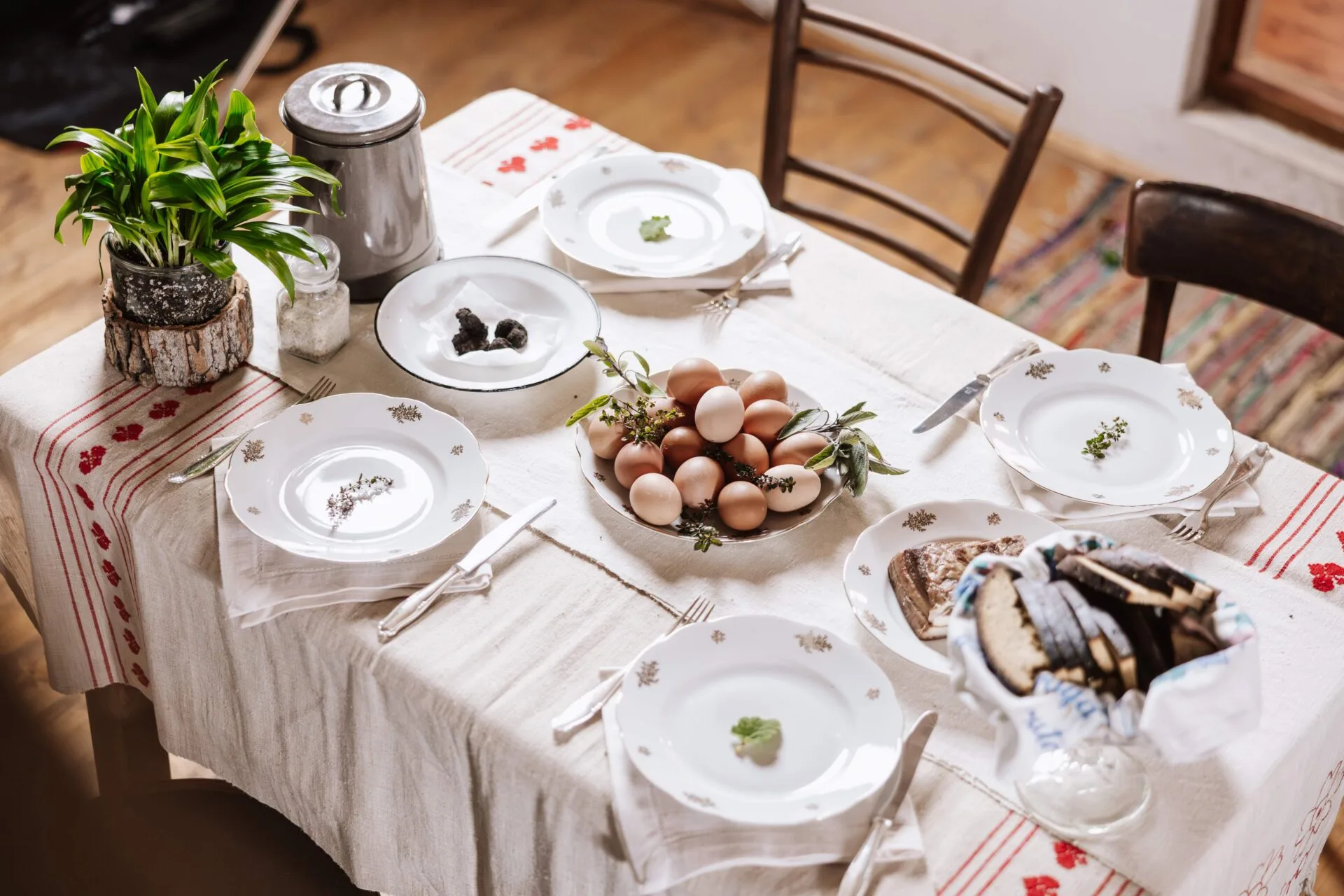
On Easter Sunday, families gathered around the table, often after early morning Mass. The festive table was abundant, yet simple and homemade: boiled ham, horseradish, spring onions, radishes, and bread, accompanied by traditional cakes such as walnut roll (orehnjača), poppy seed roll (makovnjača), or pinca. A special place was reserved for pisanice—eggs dyed with natural colours, most commonly onion skins, beetroot, or nettles, and decorated with wax and floral motifs.
Among the more vivid customs were egg tapping (tucanje) and gift-giving to children. In some areas, it was believed that a hare brought eggs or small gifts—a tradition that, in a more modern form, has been preserved in some families to this day.
Although lifestyles have changed, many of these customs continue to live on—from the blessing of food to family gatherings and the decoration of Easter eggs. These small yet deeply rooted rituals preserve the spirit of Vuzem in Zagreb County and serve as a reminder of what once mattered most: togetherness, faith, and the sense of a new beginning that comes with spring.

 EN
EN  HR
HR  DE
DE